1 October – 1 December 2026 · 36 states and the FCT
Renewed Hope Unity Cup
Live now
The match, and the record behind it.
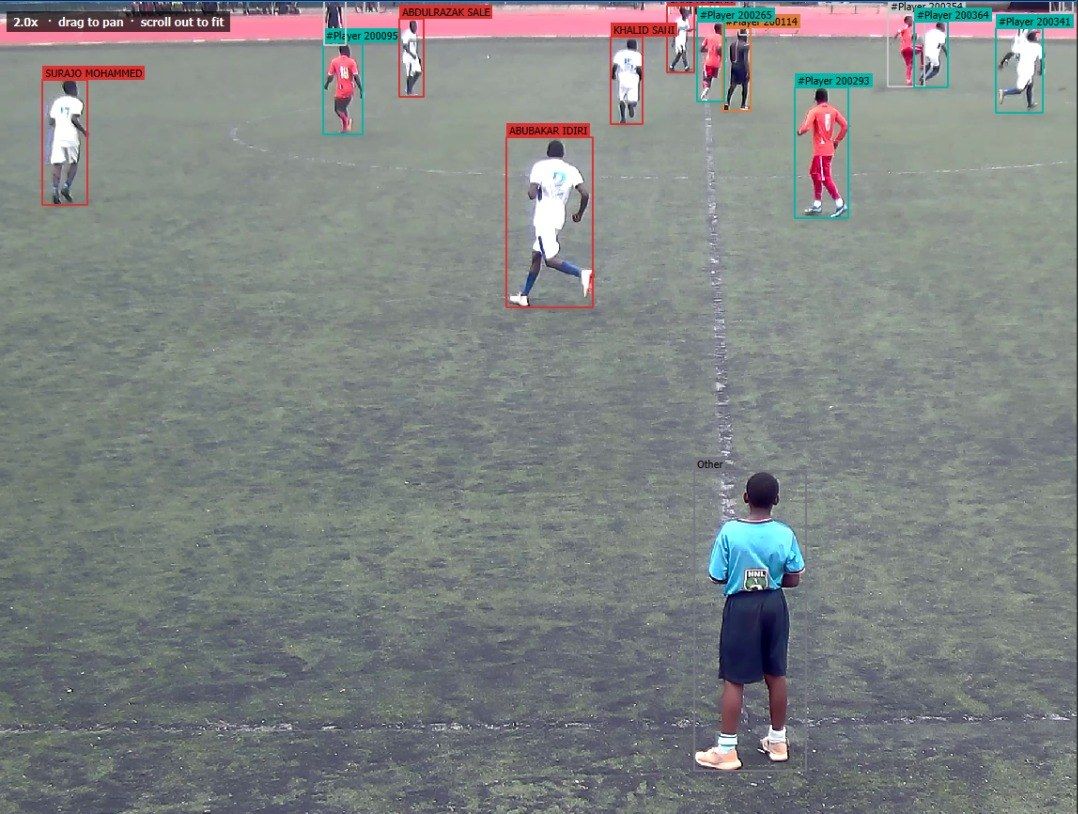
The scoreboard, the on-screen graphics and the player card beside the stream all come straight from your registration record — your name, your number and your club, spelled the way you gave them. Comments are moderated live, because most of these players are under 18.
Latest results
Results the moment a match ends.
One place for fixtures, results and standings across all four rounds, so nobody has to argue about which list is the right one. Every scoreline links to the two clubs that played it, and every club to the 35 players it registered.
The road to the final
From 740 teams to one, in four steps.
Every team enters at the same place and leaves by winning. Each step feeds the next: accreditation produces the squads that play the state ties, the state ties produce the 37 champions who contest the zones, the zones produce the six who travel to Abuja. Coverage deepens at every step — light and fast where there are twenty-five thousand players, broadcast-grade where there are eight teams left.
Accredit every squad
Field agents register all 740 squads across the 37 centres before a ball is kicked: identity and NIN, age evidence, position, preferred foot, photograph, guardian consent for anyone under 18. No team takes the field until its squad is on the register.
State play-offs
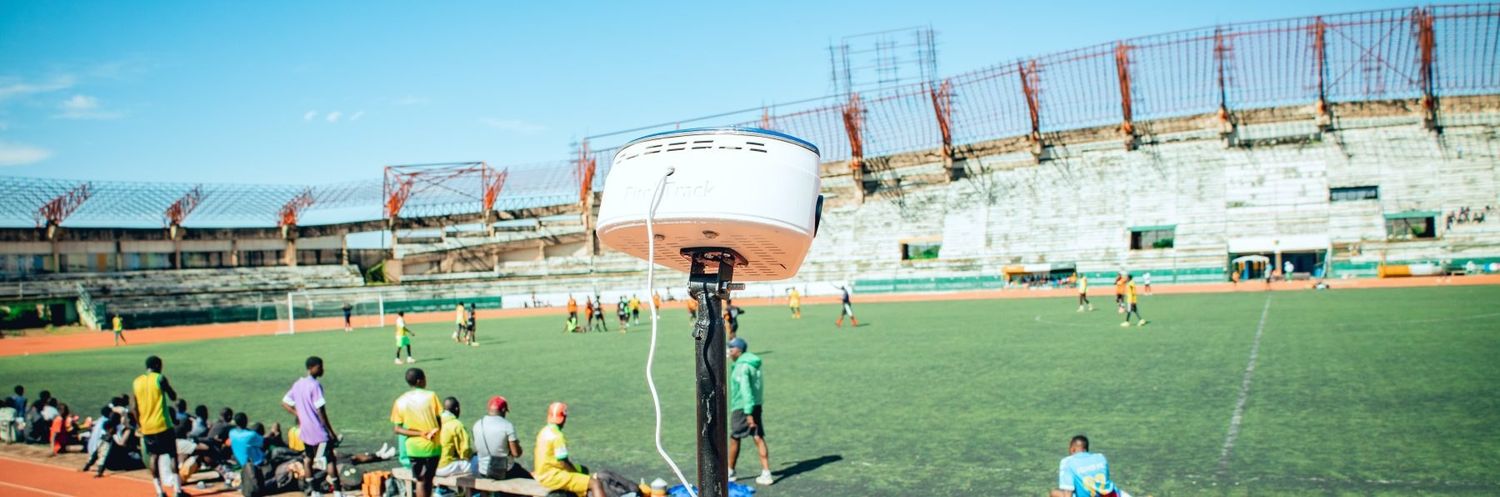
Twenty teams per centre, straight knockout, nineteen ties each — roughly two match days a week. One PitchTrack rig per centre on the halfway line tracks every match; selected ties go out on a single-camera live stream. 37 champions come out.
Zonal finals
The 37 state champions split into the six geopolitical zones and knock each other out. Full capture stack here — three-lens player rig plus a dedicated ball camera — with multi-camera production and commentary, and profiles published within 24 hours of each match.
National finals, Abuja
Six zone champions and two wildcards, two groups of four, then semi-finals and the final on 1 December at one venue. Broadcast production with live analytics overlays and replay, and a scouting feed opened to accredited clubs and agents under the consent each player signed.
Measured, not remembered
“He’s quick” is not a negotiating position.
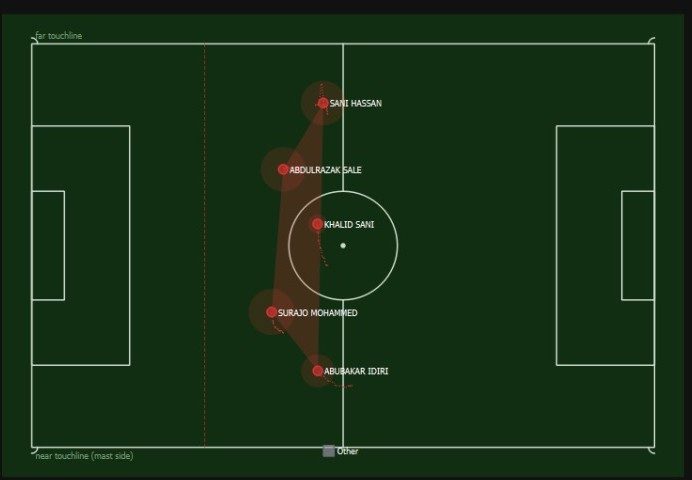
Distance, sprints, top speed, territory and team shape — measured from footage by the PitchTrack rig, not from opinion or a stopwatch. The numbers attach to a person rather than a shirt number, because the registration record follows the player onto the pitch. This is the same rig and the same software already used on NPFL and academy football in Nigeria.
And then the record does not stop at the final whistle
The data does not stay with the tournament. It leaves with the player.
The record that outlives the trophy
Every match a player plays here is data he takes with him — into a FIFA Electronic Player Passport that travels to any club, in any country, that asks.
Every player registered for this competition is captured in the shape FIFA Connect expects: one persistent identity, a verified date of birth, and a club registration history that grows every time he plays. That is precisely the record a FIFA Electronic Player Passport is built from — so when the federation registers him, the passport can be issued from what this tournament already collected, without anyone re-entering a detail.
A player can export his own record at any time — every match, every measurement and the footage behind it — and hand it to a club, an agent or a federation himself. The passport is issued by the federation, not by us; what the Unity Cup produces is the evidence it is issued from, and 25,900 players leaving a competition owning theirs is a national asset that outlives the trophy.
One identity, kept for life
A Unity Cup ID tied to his NIN at the point of capture, with age evidence and guardian consent on file. The same ID follows him into the analytics, the stream graphics and the impact report — and out the other side into whatever he does next.
Discoverable on numbers, not on a phone call
A scout opens a profile, not a highlight reel: distance per 90, top speed, sprints, minutes, position on the pitch, and the video the figures came from. A kilometre means the same thing in Kano as it does in Kaduna, Lisbon or Leipzig, which is what lets a player be found from anywhere.
A registration history, not a CV
Every club he was registered with and every match he played, recorded as it happens rather than reconstructed years later from memory. A CV can be written by anyone; a registration history is the thing that can be checked.
The money follows the record home
When a player transfers abroad, training rewards and solidarity payments are owed to the clubs that developed him — but only against a registration history somebody kept. This competition keeps it, so the money can follow the player back to the club that raised him.
What the numbers look like
Ranked on distance per 90, from the clubs still in the competition
What is measured on every tracked match
A figure that cannot be obtained is left blank with a reason, never filled with a plausible-looking stand-in. That rule is the reason these profiles are worth opening — and the reason a passport built on them can be trusted.
One record, from your first match to your last
Your name is entered once, on the day you register. Everything you do after that attaches to you — not to a shirt number, and not to somebody’s memory.
The agent registers you. This site publishes your page. The camera measures your match and files it against your ID. The commentator reads your name off that same record. Nothing about you is typed in twice, and nothing is lost between one round and the next.